Youth Aggression Cohort Catalogue

Conduct Disorder

cohorts included

The Youth Aggression Cohort Catalog is a harmonized, FAIR-aligned resource that systematically maps large, genetically informed cohorts assessing aggressive behavior in individuals under 18 years of age. 

Using an automated literature search combined with large language model–based cohort extraction and rigorous human curation, we identified over 40 accessible cohorts worldwide, representing approximately 850,000 participants.

This catalog addresses fragmentation in aggression research by providing a centralized overview of cohorts with validated aggression phenotypes and available genetic data, enabling large-scale, cross-cohort, and developmental analyses of aggression in youth.

Read the paper:
in preparation

Code Repository: 
https://gitlab.rz.uni-frankfurt.de/cap_molgenlab/aggressioncohortcatalogue

Data Repository Snapshot (2026-01-12): 

Explore the data

Genetic and epigenetic factors of female conduct disorder

Conduct Disorder

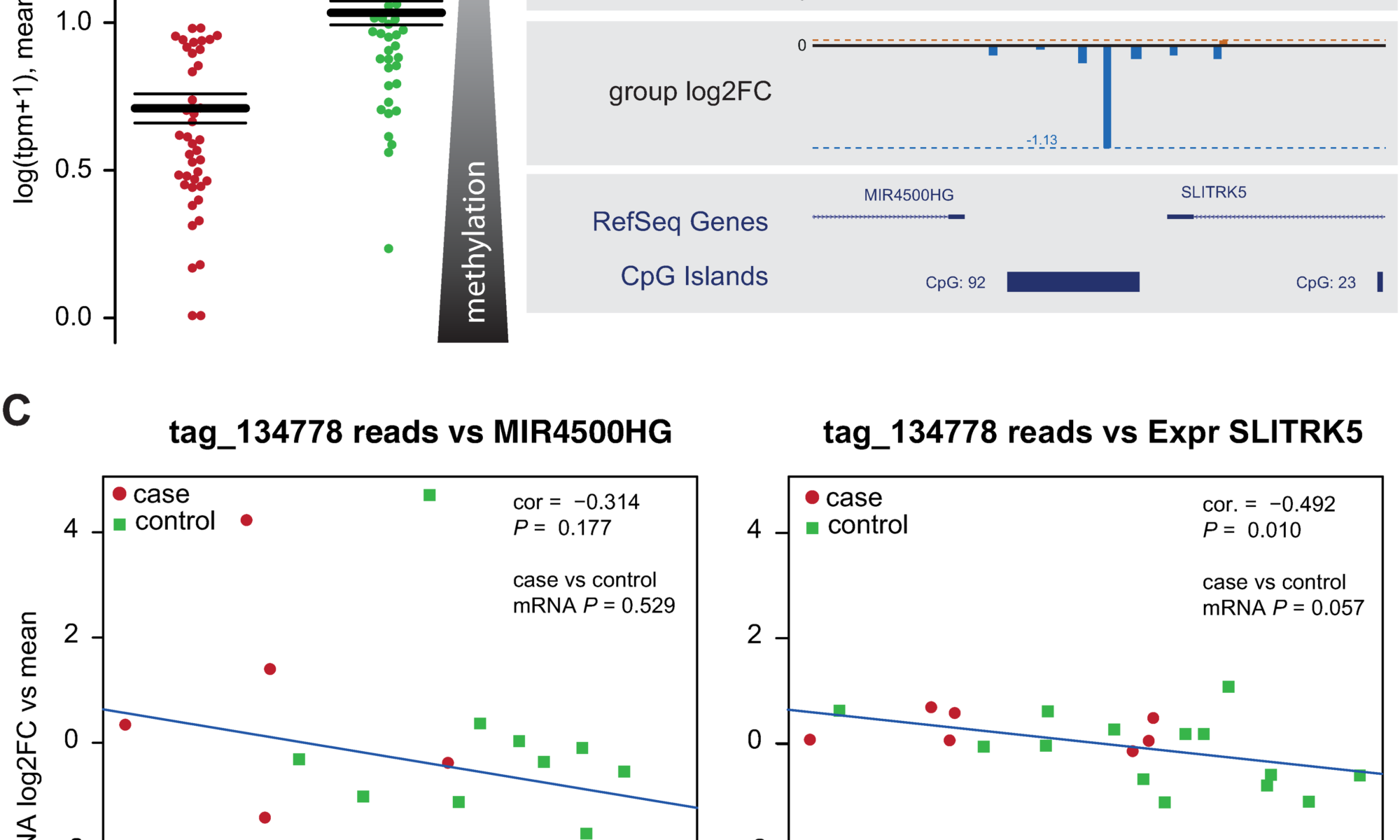
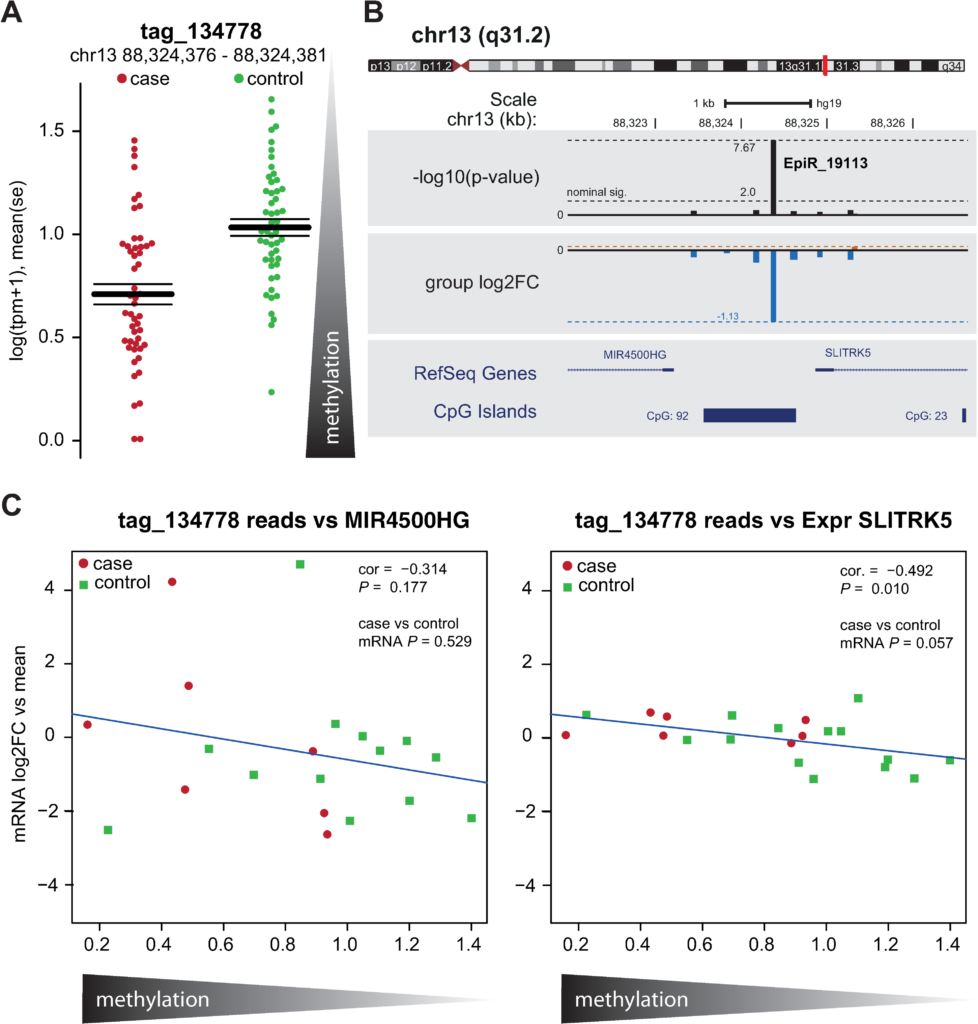
SILTRK5 methylation is associated with conduct disorder in females

Our clinic is currently conducting a Europe-wide study to research social behaviour disorders in girls. The special focus of this study is on emotion processing, neurobiology and therapy of conduct disorders (CD). This disorder can negatively affect the development and well-being of affected children and adolescents as well as their families, caregivers and teachers. However, research to date has mostly focused on investigating the causes, course and treatment options for boys with CD. Although CD is more common in boys than girls, approximately one to three percent of girls also suffer from it, and the number of girls with CD in Western societies such as the EU has increased significantly in recent years. A total of 17 research institutes from eight EU countries are participating in the large-scale study. The aim of the study is to better understand social behaviour disorders and to identify possible differences between boys and girls with CD and healthy control subjects in order to develop improved treatment options.

The molecular genetics laboratory is investigating which genetic and epigenetic factors influence the risk of conduct disorders (CD) in girls and whether these correspond to the risk factors described for boys. On the one hand, we are investigating the effect of environmental factors such as smoking during pregnancy in interaction with known genetic variants as a cause of CD. Secondly, we are searching genome-wide for patterns of differential methylation of DNA (epigenetics) in female patients and healthy girls.

Funding

Publications

Chiocchetti AG, Yousaf A, Waltes R, Bernhard A, Martinelli A, Ackermann K, et al. (2022) The methylome in females with adolescent Conduct Disorder: Neural pathomechanisms and environmental risk factors. PLoS ONE 17(1): e0261691. https://doi.org/10.1371/journal.pone.0261691
Farrow, E., Chiocchetti, A.G., Rogers, J.C. et al. SLC25A24 gene methylation and gray matter volume in females with and without conduct disorder: an exploratory epigenetic neuroimaging study. Transl Psychiatry 11, 492 (2021). https://doi.org/10.1038/s41398-021-01609-y
Farrow, E., Chiocchetti, A. G., Rogers, J. C., et al. (2021). Correction: SLC25A24 gene methylation and gray matter volume in females with and without conduct disorder: an exploratory epigenetic neuroimaging study. Translational psychiatry11(1), 553. https://doi.org/10.1038/s41398-021-01643-w
Freitag, C.M., Konrad, K., Stadler, C. et al. Conduct disorder in adolescent females: current state of research and study design of the FemNAT-CD consortium. Eur Child Adolesc Psychiatry 27, 1077–1093 (2018). https://doi.org/10.1007/s00787-018-1172-6
Bernhard A, Ackermann K, Martinelli A, Chiocchetti AG, et al. (2022) Neuroendocrine Stress Response in Female and Male Youths With Conduct Disorder and Associations With Early Adversity. J Am Acad Child Adolesc Psychiatry.  61(5):698-710. https://doi.org/10.1016/j.jaac.2021.11.023

Genome-wide association of common polymorphisms with psychiatric phenotypes: a systems biology study.

Conduct Disorder

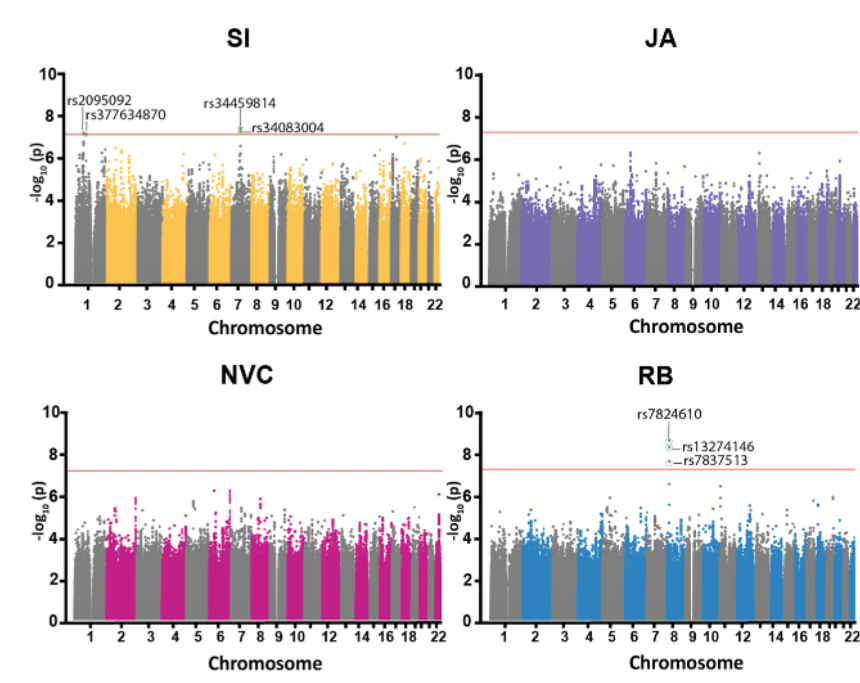
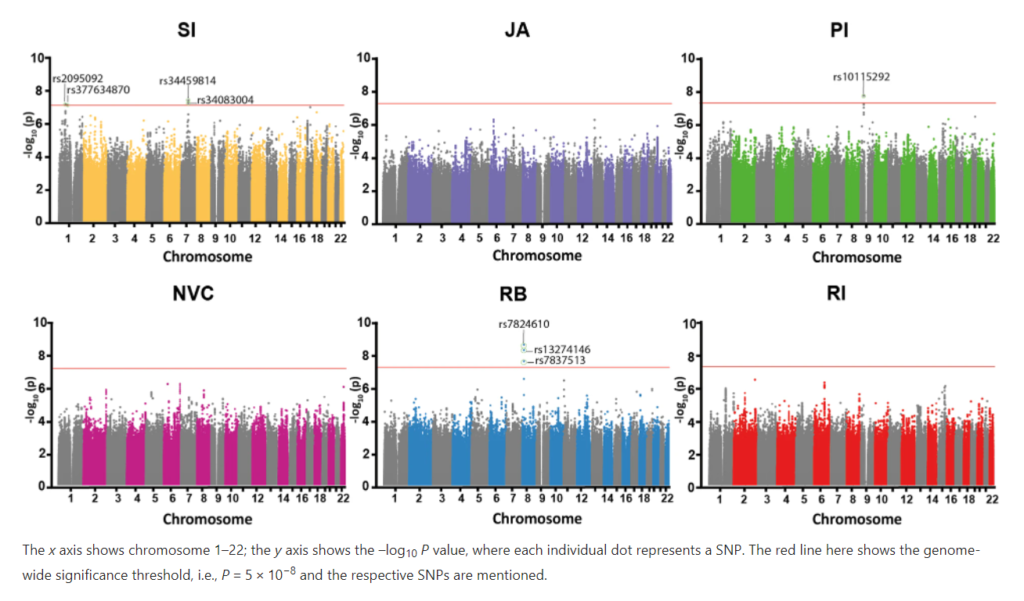
Manhattan plots of genome wide association signals for autism associated phenotypes (SI: social interaction; JA: Joint Attention; NVC: non-verbal communication; RB: repetitive behaviour)

Common genetic variants explain a significant proportion of the genetic risk in autism or conduct disorder. However, it is unclear to what extent these variants also influence the expression of disorder associates phenotypes and which biological networks are particularly relevant. In this genome-wide study, we test common single nucleotide polymorphisms for association with clinical measures and identify the underlying genes. Bioinformatic and graph-theoretical analyses enable us to identify specific processes. Here we also draw on our cohort of families and affected individuals, which is unique in Germany. We also emphasise the many years of close collaboration with patients, relatives and clinics. The analysis and validation of the results are carried out in data from the Autism Genome Project and the SFARI Autism Initiative as well as the FemNAT/CD study.

Funding

Publications

Yousaf, A., Waltes, R., Haslinger, D. et al. Quantitative genome-wide association study of six phenotypic subdomains identifies novel genome-wide significant variants in autism spectrum disorder. Transl Psychiatry 10, 215 (2020). https://doi.org/10.1038/s41398-020-00906-2